
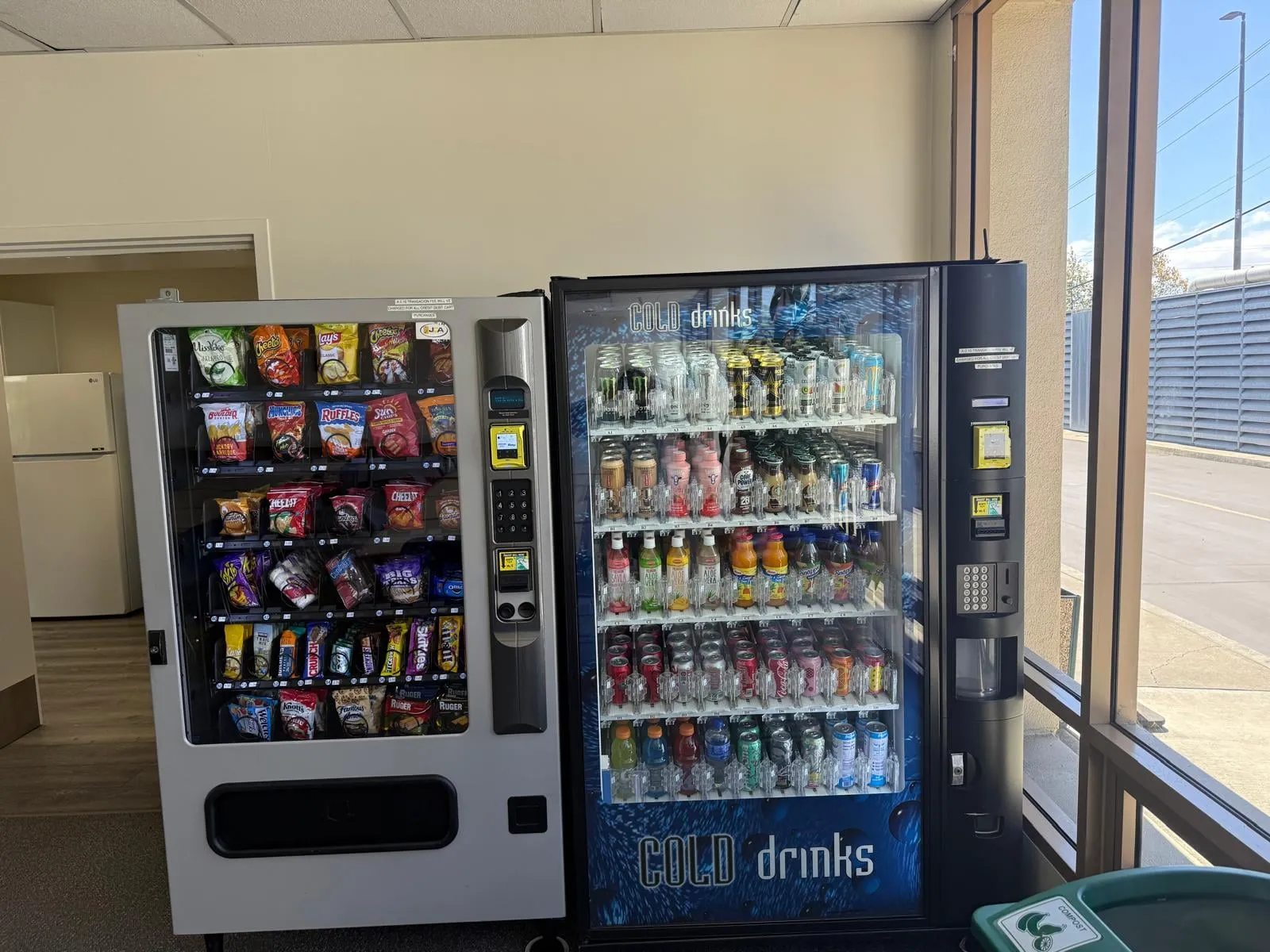
A free vending machine is exactly what it sounds like: a vending company puts a snack or drink machine at your business, you pay nothing for the machine, the products or the service, and the company earns money from what people buy. It is one of the few “free” offers that really is free — as long as your location has enough people to make it worth it for the operator.
Here is how it works, who qualifies and what to ask before you say yes.
Who pays for what
With free vending placement (also called “full-service vending”), the costs are split like this:
| The vending company pays | Your business provides | |
|---|---|---|
| The machine | ✅ Buys or owns it | — |
| Delivery and installation | ✅ | Space near an outlet |
| Snacks and drinks | ✅ Buys all products | — |
| Restocking | ✅ Comes on a schedule | Access to the machine |
| Repairs | ✅ | A call when something is wrong |
| Card readers and payment fees | ✅ | — |
| Electricity | — | ✅ A regular outlet |
So the only real cost for you is the power the machine uses and a few square feet of floor.
How the vending company makes money
The operator buys products at wholesale and sells them at retail prices. Every bag of chips or bottle of water that sells covers a small part of the machine, the route, the truck and the time it takes to keep everything full.
That is why location matters so much. A machine in a busy warehouse with three shifts can sell hundreds of items a week. A machine in a five-person office might sell a handful. The first pays for itself; the second does not.
Who qualifies for a free vending machine
Operators look at a few simple things:
- How many people are there every day. Employees, students, members, guests or patients all count.
- How long they stay. People on 8–12 hour shifts buy more than people who stop by for ten minutes.
- What else is close by. If there is no café or store within walking distance, a machine sells more.
- Access and hours. Machines in places open long hours, or 24/7, sell more.
Places that usually qualify:
- Offices with a break room
- Warehouses, factories and distribution centers
- Auto dealerships and repair shops
- Gyms and fitness studios
- Hotels and apartment buildings
- Schools, hospitals and clinics
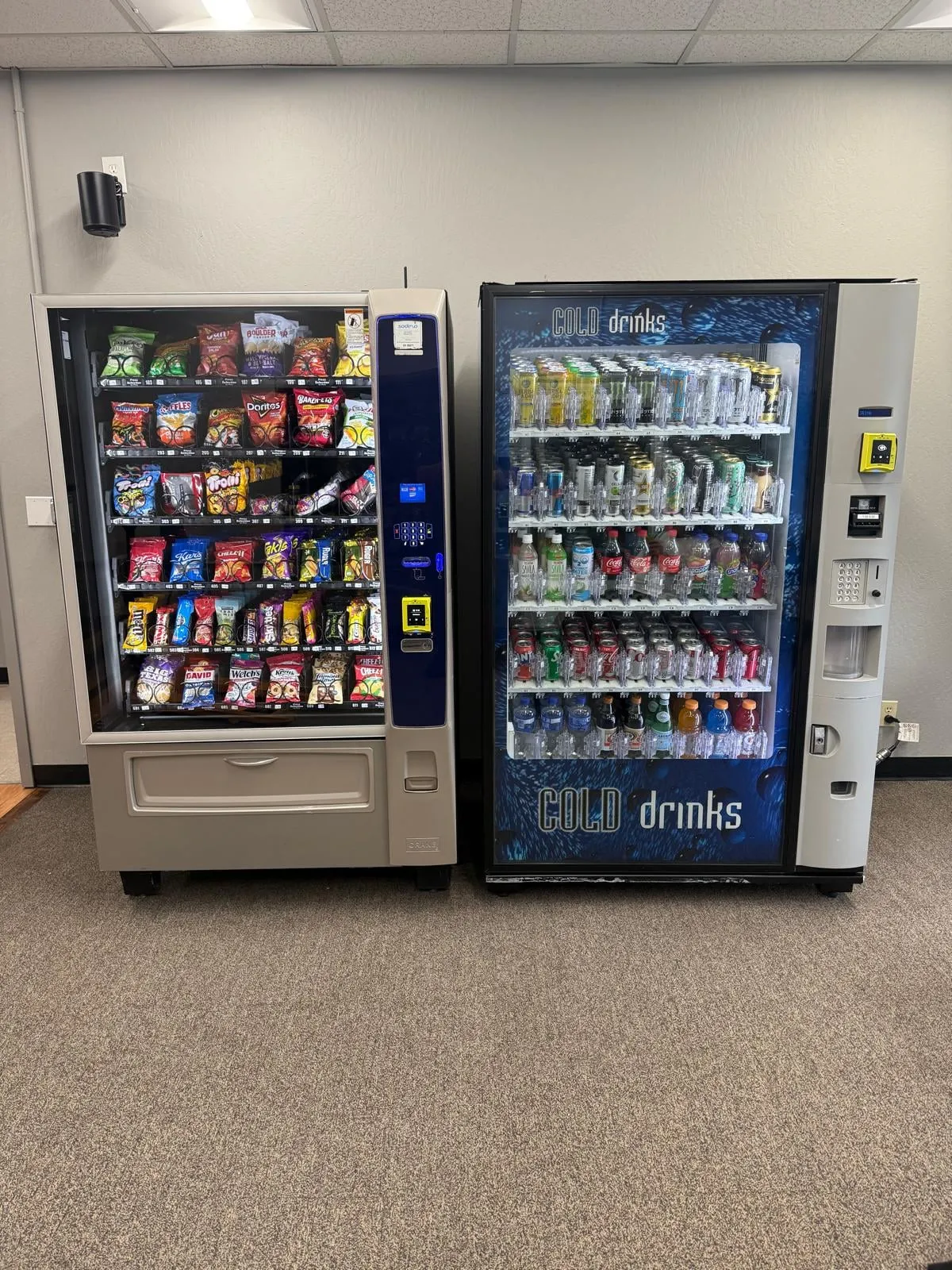
If your place is small, it may still qualify for a smaller machine or a mix of snacks and drinks in one unit. The fastest way to know is to ask: a good operator can tell you in a short phone call.
What you can choose
Free does not mean you get whatever the operator wants. You can usually ask for:
- The type of machine: snacks, drinks, or a combo of both.
- The products: healthy snacks, local favorites, energy drinks, coffee drinks, water.
- Payment options: cash, cards and phone payments.
- Other services: some operators also set up micro markets (a small self-checkout store with fresh food) or office coffee service for bigger teams.
What to ask before you say yes
Not every “free vending” offer is the same. Ask these questions before anything is installed:
- Who do I call when something goes wrong, and how fast do you come? A local operator can usually respond faster than a national company with a call center.
- How often will you restock? Empty machines are the most common complaint.
- Can we change the products? Your team should be able to ask for what they like.
- Is there a contract, and how do we end it? Know how long you are committing to.
- Who handles refunds when a machine takes someone’s money? It should be simple.
Red flags in a “free vending” offer
Most operators are honest, but a few offers look free and are not. Watch out for:
- An upfront “setup” or “placement” fee. With real free placement, you do not pay to get the machine.
- A long contract with a penalty to cancel. You should be able to end the service if it does not work for you.
- No local phone number. If a machine breaks on a Friday, you want someone nearby who can come.
- Fixed products you cannot change. If nobody buys what is inside, the machine is useless to you and to the operator.
- Vague answers about restocking. “We’ll come when we can” usually means an empty machine.
Common myths about free vending machines
“There must be a catch.” The catch is simple: the operator needs enough sales to cover the machine and the route. If your place has the traffic, there is nothing else to pay.
“Vending machines only sell junk food.” Not anymore. You can ask for nuts, protein bars, jerky, baked chips, sparkling water and other better-for-you options next to the classics.
“Machines are always broken or eat your money.” Older coin-only machines did. Modern machines take cards and phone payments, and a good operator handles refunds quickly.
“It will look cheap in our office.” New machines have glass fronts, LED lights and clean designs. In offices, many companies choose a micro market instead, which looks like a small store.
What the first month looks like
- Week 1 — Visit and plan. The operator checks the space, the outlet and the traffic, and you agree on the machine and the first product list.
- Week 1–2 — Install. The machine is delivered, leveled, plugged in, stocked and tested. Card and phone payments are activated.
- Weeks 2–4 — Learn and adjust. After the first restocks, the operator sees what sells and what does not, and changes the slow items. Ask your team for requests during this time.
- After that — Routine. Restocks happen on a schedule based on sales. You only call if something is wrong or if you want new products.
Vending machine, micro market or office coffee?
Free placement is not only for vending machines. Depending on your team, another option may fit better:
| Option | Best for | What people get |
|---|---|---|
| Vending machine | Small to mid-size teams, shift work, public areas | Snacks and drinks 24/7, cash and cashless |
| Micro market | Larger teams with a break room | Open shelves and coolers, fresh food, self-checkout |
| Office coffee service | Offices of any size | Coffee machines, coffee and supplies, refilled for you |
Many businesses combine them: a coffee machine in the office kitchen and a vending machine in the warehouse, for example.
Free vending vs. renting or buying a machine
You will also see companies offering to rent or sell you a vending machine. That makes sense if you want to run the machine yourself and keep the profits. For most businesses, though, the goal is simply to give people snacks and drinks without extra work. That is what free placement is for: the operator does everything, and you get an amenity at no cost.
How it works with us in the Bay Area
We are a local vending company based in Burlingame, and this is how we do it:
- You call or send the form. Tell us about your place and how many people are there.
- We visit for free. We check the space and help you pick the machines and products.
- We install it and keep it full. We restock, handle repairs and adjust the products to what sells.
We serve San Francisco, the Peninsula, the South Bay, the East Bay, the North Bay and Santa Cruz County. If you are not sure your place qualifies, just call — it takes two minutes to find out.