Renting a vending machine usually costs $50 to $250 a month for a standard snack, drink or combo machine, and $150 to $400 a month for a smart cooler or touchscreen machine. On top of that you normally pay for the products, the restocking time, card processing fees and sometimes delivery, a deposit and repairs.
But before you sign a rental contract, ask yourself one question: do you want to run a vending business, or do you just want a vending machine at your location? If it is the second one, you probably should not rent at all. Full-service vending companies place, stock and repair machines at qualifying businesses for $0 — they earn from the sales instead of charging you rent.
This guide breaks down what rental really costs in 2026, what is hidden in the fine print, and when free placement is the better deal.
Vending machine rental prices in 2026
These are typical monthly prices published by vending companies and industry guides this year:
| Machine type | Typical monthly rent | Notes |
|---|---|---|
| Basic snack or soda machine | $50–$100 | Older or refurbished models, often coin and bill only |
| Refrigerated combo (snack + drink) | $100–$175 | One machine, two product types |
| Smart machine with touchscreen and cashless pay | $150–$250 | Card and phone payments built in |
| Smart cooler / AI fridge | $150–$400 | Open-door coolers with camera or weight checkout |
| Specialty (fresh food, PPE, electronics) | $200–$400+ | Depends heavily on the equipment |
Sources: Wendor, Vending Group and Vending Playbook, which tracks published prices from companies that rent and lease machines.
A few real examples from published price lists show how wide the range is. One smart cooler program lists $399 a month on a 36-month commitment. Lease-to-own coolers start around $150–$230 a month for 36 months. A refurbished drink machine can be financed for under $50 a month, plus documentation fees.
What the monthly rent does not include
The rent is only the start. This is where most people underestimate the real cost:
- Products. In most rental deals you buy every snack and drink yourself. Product cost is commonly 40–55% of sales.
- Your time. Someone has to shop, restock, count cash, clean the glass and deal with jammed coils.
- Card processing. Cashless readers cost $200–$500 to add on older machines, and card sales usually carry 5–7% in fees, plus telemetry software that can run $20–$60+ a month on smart machines (Vendingpreneurs).
- Delivery and setup. Sometimes free, sometimes $100–$500.
- Deposit. Often one to three months of rent.
- Contract length. Terms of 12 to 36 months are normal. Cancel early and you may owe the remaining months — on a $399/month contract, that can be thousands of dollars.
- Repairs. Some rentals include repairs; many only cover “major” ones.
A simple example: one combo machine for a year
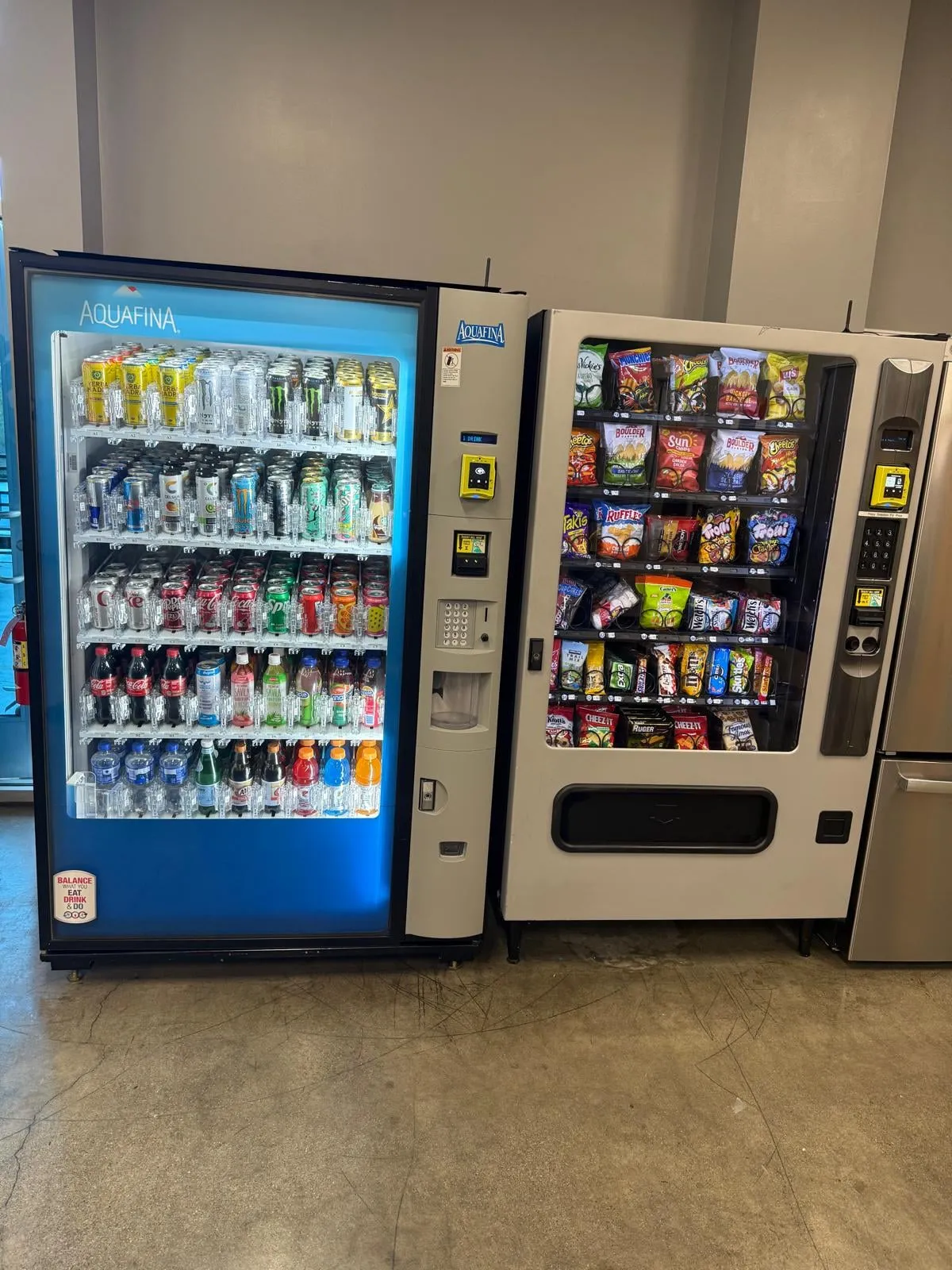
Say you rent a combo machine for $150 a month for your warehouse:
| Cost | Per year |
|---|---|
| Rent ($150 × 12) | $1,800 |
| Delivery and setup (one time) | $100–$500 |
| Card fees and software | $200–$700 |
| Products | 40–55% of everything you sell |
| Your restocking time | 2–4 hours a month |
Before you sell a single bag of chips, you are about $2,000–$3,000 in the hole for the year, and you still have to buy the products. If the machine sells less than expected, you keep paying the rent anyway.
That math works for some people — mainly those who want to become vending operators. It rarely makes sense for an office manager, a property manager or a business owner who just wants snacks and drinks on site.
The alternative: free full-service placement
With free placement (also called full-service vending), the roles flip:
| Renting a machine | Free full-service placement | |
|---|---|---|
| Monthly fee | $50–$400 | $0 |
| Machine | Rented, returned at the end | Owned by the vending company |
| Products | You buy them | Vending company buys them |
| Restocking | You do it | Vending company does it |
| Repairs | Often extra | Included |
| Card readers and fees | You pay | Vending company pays |
| Contract risk | 12–36 months, early-termination fees | Ask your operator; no rent to owe |
| Who keeps the sales | You | Vending company |
The vending company makes its money from sales, so it is in its interest to keep the machine full, working and stocked with what people actually buy. You provide the floor space and a regular outlet. We explain the full model in how free vending machines work.
Who qualifies for a free machine?
Operators place machines where enough people buy every day. There is no single industry number. As an example, one national operator publishes guidelines like 40+ full-time employees for a soda machine or 75+ for snack and soda, hotels with 40+ rooms and apartment buildings with 100+ units (Vending Group).
Local operators are often more flexible, because their trucks already drive past your building. Good candidates include:
- Offices and tech campuses
- Warehouses, factories and distribution centers
- Auto shops and dealerships
- Gyms and fitness studios
- Hotels and motels
- Apartment buildings and dorms
- Clinics and other places where people wait
If you are not sure, a five-minute call usually answers it.
When renting actually makes sense
Renting is the right call in a few situations:
- You want to start a vending business and test a location before buying equipment.
- You want to keep 100% of the sales and you are happy to manage inventory.
- You need a machine for a short event — a festival, a trade show, a construction site for a few months.
- Your location is too small for free placement, and you still want a machine on site.
For everyone else — especially businesses that want an employee or customer perk without a new monthly bill — free placement is usually the better deal.
Questions to ask before you sign any vending contract
Whether you rent or get a free machine, get clear answers to these:
- What exactly is included in the monthly price (repairs, card reader, delivery, pickup)?
- Who buys the products, and who sets the prices?
- How often is the machine restocked?
- How long is the contract, and what happens if I cancel early?
- Who handles refunds when the machine keeps someone’s money?
- Can I choose healthier products or specific brands?
- Is there a commission or revenue share for my location?
Bay Area: skip the rent
If your business is in the San Francisco Bay Area, JCA Vending places snack and drink machines at no cost to qualifying locations. We deliver and install the machine, stock it with the products your people want, take cash, cards and phone payments, and handle every repair. There is no rent to pay.
We serve the Peninsula, the South Bay and the East Bay — including San Francisco, San Jose, Oakland, San Mateo and Fremont. Besides vending, we offer micro markets, office coffee and office water.
Tell us about your location below and we will tell you, quickly and honestly, whether it qualifies for a free machine.